History of the Leading Creek
By Benny Linn
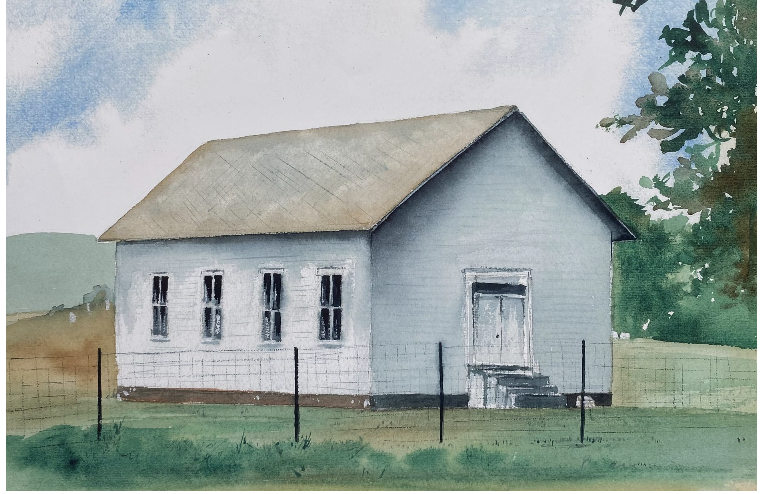
The history of Leading Creek Primitive Baptist Church is very personal to me, because its pastoral lineage is made up of my father and fathers before him. The “Elders” as they were called passed from father to son. When it came to my father, he was a grandson in the lineage. This is an interesting bit of history in which the pastorate remained in one family through five generations. The history of the Leading Creek Primitive Baptist Church is one of the oldest and strongest of the pioneer families in the Leading Creek Valley. The Leading Creek Church was established under the leadership of Elder D. P. Murphy, Hickman Chenoweth, Archibald Ferguson, and others. Fourteen members were given “letters of release” from the Valley Church which was located south of Elkins. These 14 members had to travel 15 to 20 miles from the Leading Creek Valley, from the vicinity of what is now Montrose and Kerens. These folks grew weary traveling by wagon, horseback, or on foot in order to attend the regular monthly services at Valley Church. Thus, the Leading Creek Primitive Baptist Church was established and constituted on April 25, 1854. This was nine years before West Virginia became a state and 41 years before Montrose was incorporated in 1895. The land for the church and the cemetery was donated by Wyatt and Solomon Ferguson.
The Pastoral Lineage
The first pastor of the Leading Creek Church was David P. Murphy and served for 31 years. He was one of the strong-minded men of his time and was an able expounder of his faith. He was eloquent in expression and clear in his explanation of his belief, and was also known for speaking out in regards to questions of theology. He was more inclined to be argumentative in nature with his belief. At the time of his death, the pastoral care of the church was then passed on to his second son, James Murphy, soon after his father’s death. James Murphy was the pastor for 18 years and had a different approach than that of his father. He was also strongly grounded in the religious belief, but did not disagree with others’ customs or manners of worship. He preached humility, kindness, and charity to all men. The next two pastors of Leading Creek adopted similar attitudes, traits, and characteristics of James Murphy. An additional note about James Murphy is that he was unable to walk because of rheumatism and would ride on horseback to the church. He was carried to the pulpit where he sat in a revolving chair in order to deliver his sermons. The Civil War began in 1861, and James was a true believer in God, Jesus Christ, and the great commandment found in Matthew chapter 22: vs. 36-40. A portion from this passage reads “Love thy God with all thy heart, and love thy neighbor as thyself.” He vowed never to go to war to kill a neighbor or a brother. He was arrested as a “Southern Sympathizer” by the Union and put in prison 40 miles away at Grafton. Because winters were very cold, he spent nights crawled up under a building to keep from freezing to death and, thereby, developed rheumatism causing him to never walk again. Interesting to note, he had three brothers who were with Stonewall Jackson’s 25 th Virginia Regiment in the Shenandoah Valley and this may have been another reason for his arrest. After the Civil War, he became an Elder of the church.
Elder Jonah Stansbury Murphy was elected pastor following the death of his father, James, and served for 48 years. I have in my possession Jonah Murphy’s cane. When looking at it, it’s straight forward, simply crafted with no inscriptions, and nothing added to it, but it is very functional in its use. I compare his cane with his life…very strong and sturdy. He scratched out a living in black dirt. Nothing came easy. He was mild in manner and exhibited human kindness. He studied the Scriptures and promoted goodness both in the church and the community. He married Lenora D. Shoemaker and had ten children: Burr, Bessie, Beman, Burland, Bernice, Bycie, Benton, Bunie, Bonnie, and Beulah. Many descendants of Jonah Murphy are buried in the Leading Creek Primitive Baptist Cemetery along with Jonah and Lenora Murphy.
At the death of Jonah Murphy, his grandson, Elder Velden B. Linn, my father, served in the pastoral role here at the church for 63 years. My father was the third son of Bernice Murphy Linn, daughter of Jonah Murphy. Dad was well-loved by all the congregants. He studied the Scriptures and read extensively. He knew his Bible. He had a full library of material and correspondence from others of like belief. My father traveled to many meetings throughout the country from California and Texas to Virginia, Maryland, North Carolina, Alabama, and all over West Virginia, getting to know many people over the years. Because of this he was called to conduct many marriages and funerals. My father was inspired by the Lord to do what he did, and I feel he was also greatly influenced by his grandfather, Elder Jonah Murphy. He was a WWII vet, having served in the South Pacific from 1939 to 1945. There are many vets in this cemetery…War of 1812, Civil War, Spanish American War, WWI, WWII, Korea, Vietnam, and Gulf Wars. We proudly fly the American flag and salute our vets!
The church was often referred to as the “meeting house” as the true church lived in the hearts and minds of its members. The cemetery became a final resting place for Primitive Baptists, Methodists, IOOF members, and many others in the Montrose community. There are now over 700 marked burials and approximately 160 unmarked gravesites. An additional note: Irish and Italian immigrants who were used to work on the railroad throughout this area died from disease and were buried in the cemetery. Many had no last names for the markers since they were unknown.
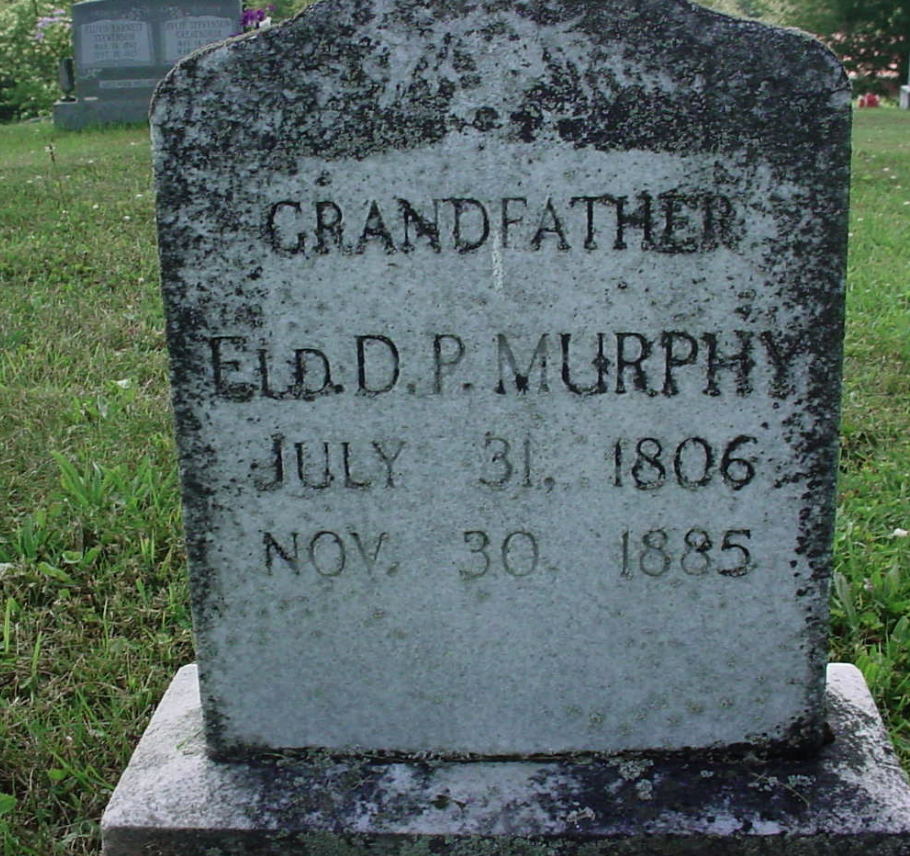
David P. Murphy
July 31, 1806 - Nov. 30, 1885
1st Elder of the Leading Creek Primitive Baptist Church. Elder for 30 years from 1854 to 1884; father of James A. Murphy.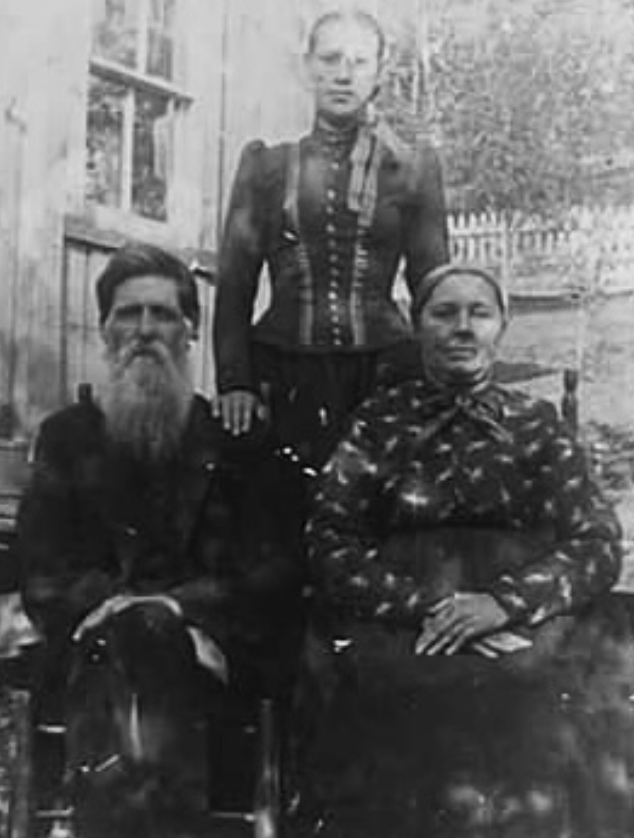
James A. Murphy
June 24, 1833 - Jan. 30, 1903
2nd Elder of the Leading Creek Primitive Baptist Church. Elder for 18 years from 1884 to 1902; father of Jonah Murphy.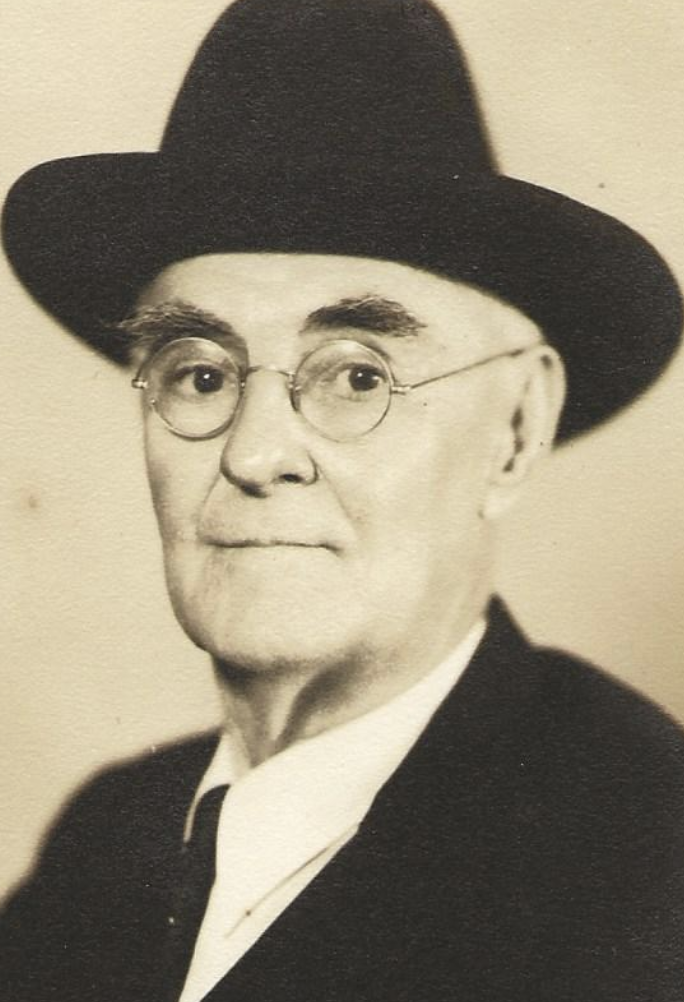
Elder Jonah Murphy
Feb. 5, 1867 - Dec. 27, 1951
3rd Elder of the Leading Creek Primitive Baptist Church for 48 years from 1902 to 1950; grandfather of Velden Benton Linn.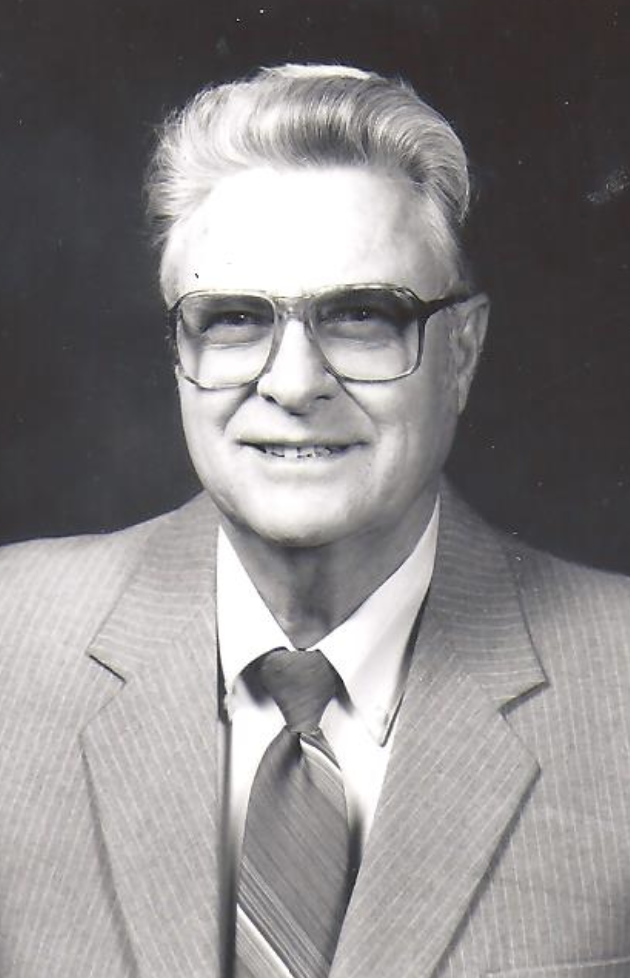
Elder Velden Linn
May 2, 1921 - Sept. 23, 2014
4th Elder of the Leading Creek Primitive Baptist Church for 63 years from 1950 to 2013.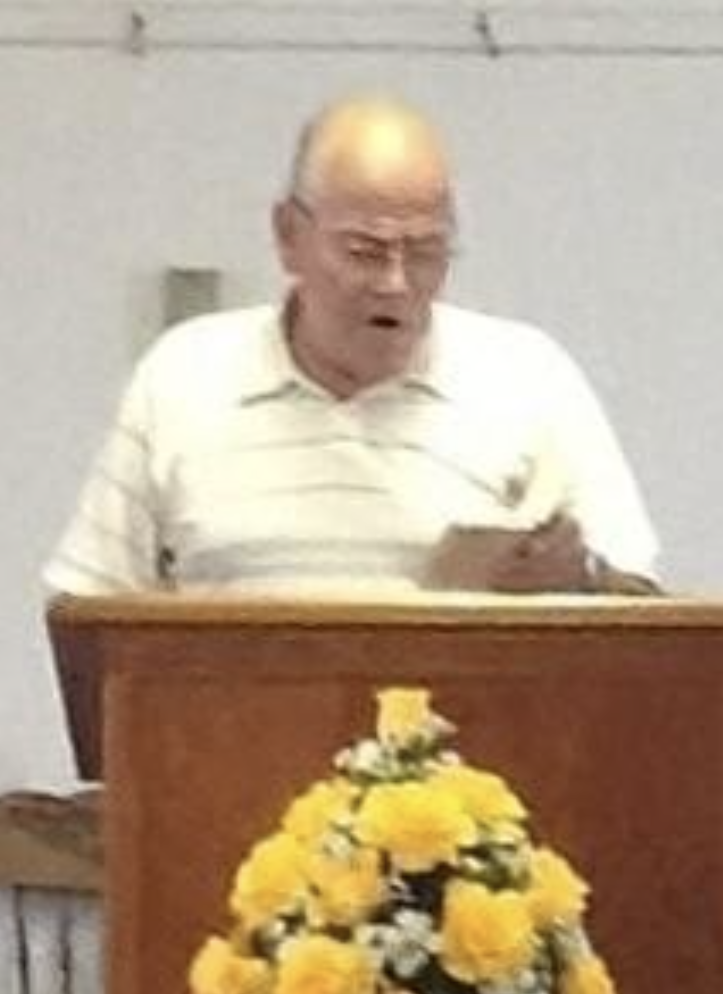
Elder Lewis Johnson
Dec.21, 1938 - D. March 18, 2020
Velden's Assistant Elder took his place and served the church after Elder Linn' death. An old Baptist meeting for visitation or association
Usually, meetings were on a Saturday and Sunday and sometimes on Friday. The group would gather about 9:30 outside to meet and greet. There were stories, laughter, and sharing of burdens and concerns. In my day, there were 20-25 folks attending a service, but some meetings might have 50 in attendance. The folks slowly filed inside. Someone would call for a hymn from the little blue hymn book. Oftentimes, a deacon or elder would ask for someone to assist and start the song. No instruments were used. Singing would last about half an hour. There were times when a song would be lined with the reading of a line or two, followed by singing of those same lines, and then continued in the same manner. A common tune lined by my Dad was--#219 Tarry with me, O, my Savior…For the day is passing by…
The moderator would take the stand and welcome people. He made comments, led with a song, and prayed. Elders would get down on their knees to pray as a display of their humility before Almighty God. The moderator would call on a visiting Elder to come to the stand and offer his testimony or his report. Many Elders read verses from the Bible and preached a sermon and often related their experiences with the Lord. All Elders were given an opportunity to speak during the meeting, and special attention was given to the visiting Elders. Around noon, lunch would be served on the grounds. Saw horses and boards were used as tables covered with tablecloths if tables were not available. Food consisted of chicken, ham, potato salad, green beans, garden vegetables, lemonade, tea, coffee and much more. It was indeed a humble feast.
After lunch, services were begun with singing followed by additional speakers. It was hard for me to stay awake at this time due to eating a good meal on the grounds. Services would last till about 3:00 to 4:00 on Saturday, and Sunday services would end around noon. On Saturday evening, dinner and services might be held at the homes of church members. These same folks would even house visiting folks.
The Ordinance of Baptism
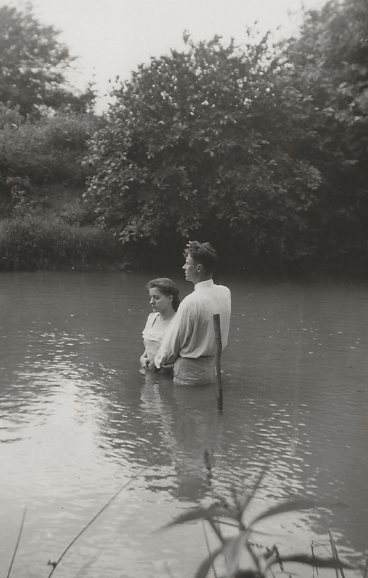
The candidate would come forward and would express an interest to join the church. Usually this would be followed with a baptism which occurred anytime during the year. Baptisms were often held about two miles from the church on the banks of Leading Creek. My father as pastor would first go out into the water with his stick and check out the water depth and look for slick rocks below. Then he would push the stick into the bottom of the creek. He would motion for the candidate to come into the water usually escorted by a deacon. Dad would perform the immersion. The congregation would sing a song while the participants came out of the water. Members would wrap a person in blankets, and the congregants would walk back to their cars to travel home after the baptismal service. After some time, baptisms were done in a member’s swimming pool because the water level of Leading Creek had diminished.
In closing, each of these Elders were extremely dedicated and proud of the little building. The Leading Creek Primitive Baptist Church still stands today as part of the LCPB or Montrose Cemetery.
References: Elder Velden Linn, Lovell Greathouse, newspaper articles (1941), church minutes, and stories I heard.
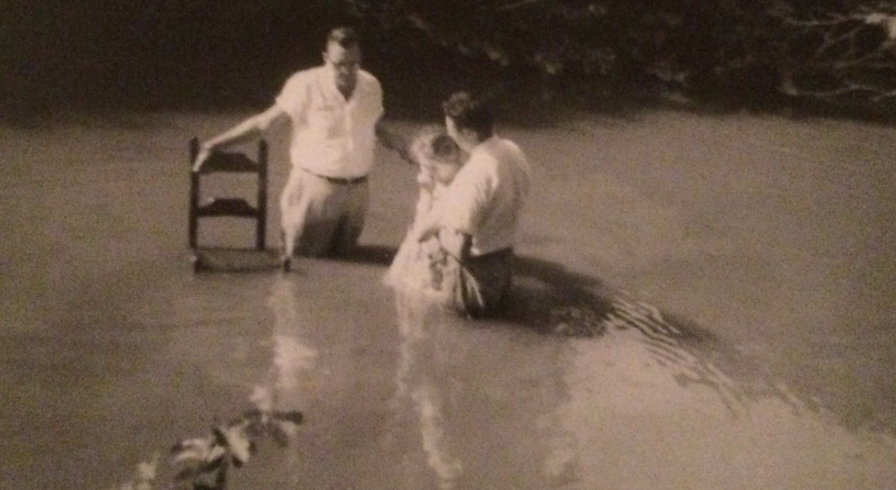
August 1961
Baptism with Elder Velden Linn and Deacon A.R. Linn for Martha Ferguson who was not physically able to walk and was brought in by chair to the water.
Elder Linn baptizing church member